Best Job Search Sites in Canada for 2026: Ranked and Honestly Compared
Written by Catherin · Published · Updated
Best Job Search Sites in Canada for 2025: Ranked and Honestly Compared
Most people start their Canadian job search the same way. They open a browser, type "jobs in Canada," and end up on Indeed. Which is fine. But if Indeed is the only tool you are using, you are probably missing a significant chunk of available opportunities and burning time applying to roles that were never a strong fit to begin with.
Canada has a surprisingly varied job search ecosystem. Some platforms are better for volume, some for quality, some for specific industries, and some for people who are new to the country and still building their professional network here. Knowing which one to use and when makes a real difference in how quickly you move through the process.
This is a practical breakdown of the best job search sites in Canada right now, what each one is actually good at, and how to use them together without spending all day clicking through listings.
Indeed Canada - Still the Biggest, Still Useful
If you need volume, Indeed is where you start. It pulls listings from employer websites, staffing agencies, and direct postings all into one place, and the result is a genuinely massive database. For most industries and most cities across Canada, it has more listings than anything else.
The search filters are solid. You can narrow by location, salary range, job type, experience level, and posting date. Setting up job alerts takes about two minutes and saves a lot of daily checking.
The downside is that quality varies considerably. You will find excellent postings from top Canadian employers alongside low-effort listings that have been sitting there for months. Pay attention to how recently a job was posted and whether the listing includes enough detail about the role and company to be worth your time. Applying to 40 vague listings in an afternoon is rarely as productive as applying carefully to eight good ones.
One practical note: make sure your resume is tailored to each posting before you apply. Indeed makes it very easy to fire off applications quickly, which means the competition on popular listings is often high. A tailored, ATS-optimised resume consistently outperforms a generic one, regardless of which platform you are using.
LinkedIn - Better for the Roles That Actually Move Fast
LinkedIn is not just a job board. It is also where a large percentage of Canadian hiring happens before a posting ever goes public. Recruiters use it actively, and many good roles get filled through direct outreach or referrals before they appear on any job board.
That does not mean you should ignore the job listings section. LinkedIn's job search is strong, particularly for professional and mid-to-senior roles in finance, technology, marketing, and operations. Many Canadian employers post here first and only move to broader boards if the LinkedIn pool does not produce strong candidates.
The key is making your profile do some of the work for you. A well-optimised LinkedIn profile with a clear headline, a strong summary section, and consistent work history means recruiters searching for your skills will find you directly. This is especially valuable in markets like Toronto, Vancouver, and Calgary where recruiter activity on the platform is high.
Your LinkedIn profile and your resume should tell the same story. If your resume has been updated with current job titles and accomplishments, your LinkedIn should reflect the same. Inconsistencies between the two are a flag that experienced recruiters notice.
Job Bank Canada - The Official Source, More Useful Than People Think
Job Bank is the Government of Canada's official job board and it is significantly more useful than most people give it credit for. The listings are employer-direct, they cover every province and territory, and the platform includes a genuinely helpful set of tools: wage data by occupation and region, labour market information, job alerts, and a resume builder.
For newcomers specifically, Job Bank has a dedicated section with resources about working in Canada, regulated versus non-regulated occupations, and information about credential recognition. It also connects to the Express Entry system, which means certain postings are specifically flagged for candidates going through the immigration process.
Federal government positions are a particular strength here. If you are interested in a career with the public service, Job Bank is your primary starting point. The federal hiring process is different from the private sector in important ways, including the specific resume format required for GC Jobs applications, but the listings are all here.
Workopolis - Canadian, Clean, and Underused
Workopolis is one of the oldest Canadian job boards and it still functions well. The listings skew more toward established Canadian employers rather than scraping everything from every source, which means the quality tends to be a bit more consistent than platforms that aggregate everything indiscriminately.
It is a particularly good complement to Indeed rather than a replacement. The overlap between the two is not total, and Workopolis occasionally surfaces postings from Canadian companies that do not post heavily on the bigger global platforms. Worth checking especially if you are in a market like Toronto or Vancouver where competition on Indeed is highest.
Glassdoor Canada - For Research as Much as Job Listings
Glassdoor is most valuable as a research tool. Before you apply for a role at any company you do not already know well, spending ten minutes on Glassdoor reading employee reviews, salary ranges, and interview experiences is time well spent. The interview insights section in particular can help you prepare specifically for what that company actually asks.
The job listings are also there and worth browsing, but the real competitive advantage Glassdoor offers is information. Going into an application or an interview knowing what former employees say about the culture, the management, and the hiring process is a real advantage that most applicants skip.
Eluta.ca - The Quiet One Worth Knowing About
Eluta is a Canadian job search engine that aggregates listings directly from employer and government websites rather than relying on postings submitted by companies. The result is a database that captures opportunities that never show up on the bigger boards, particularly from mid-sized Canadian companies that post on their own careers pages but do not pay to advertise on Indeed or LinkedIn.
It is not as visually polished as the larger platforms and it does not have the same community features. But if you have been applying steadily through the main sites and feel like you are missing opportunities, running the same search on Eluta often surfaces roles you have not seen elsewhere.
Niche Job Boards Worth Knowing by Industry
General job boards are useful but industry-specific boards often produce better results for the right candidate. A few worth knowing depending on your field:
For technology roles, Randstad Canada's tech division and AngelList (now Wellfound) are both active, particularly in Toronto's growing tech sector. ITJobs.ca is smaller but Canada-specific and worth checking for software and IT infrastructure roles.
For healthcare, provincial nursing associations and the Canadian Medical Association have job boards that are far more comprehensive for clinical roles than anything you will find on Indeed. If you are an internationally educated health professional, these boards also include information about registration and licensing requirements by province.
For government and public sector work beyond federal positions, each province maintains its own portal. Ontario's Ontario Public Service Careers, BC's BC Public Service job board, and Alberta's Alberta Public Service all post positions separately from the federal Job Bank. If you are targeting government work at the provincial level, these are essential.
For bilingual roles, APEX (Association of Professional Executives) and bilingual-specific filters on Job Bank and LinkedIn are your best options. Bilingual positions in Quebec and for federal roles often require demonstrated proficiency in both official languages, so being explicit about your French and English capabilities on your resume matters.
Specialized Remote Work Platforms
FlexJobs FlexJobs specializes in legitimate, scam-free remote and flexible work opportunities.
Subscription Benefits:
Hand-screened job listings eliminate scams
Exclusive remote opportunities not found elsewhere
Career coaching and resume review services
Skills testing to validate your remote work capabilities
Canadian Companies Featured:
Shopify, Hootsuite, Buffer, GitLab
Government of Canada remote positions
Non-profit organizations with remote opportunities
International companies hiring Canadian remote workers
Remote.co A dedicated platform for 100% remote job opportunities across various industries.
Platform Advantages:
All listings are for fully remote positions
Categories include startup remote jobs and Fortune 500 remote opportunities
Company profiles highlight remote work culture
Resources for remote work success and career development
We Work Remotely One of the largest remote work job boards globally, with significant Canadian opportunities.
Job Categories:
Programming and development
Customer service and support
Design and creative roles
Marketing and sales positions
Project management and operations
AngelList (now Wellfound) Excellent for startup remote opportunities, particularly in the technology sector.
Startup Remote Work Advantages:
Often offer equity compensation packages
More flexible remote work policies
Opportunity to grow with expanding companies
Direct contact with founders and hiring managers
How to Use These Sites Together Without Wasting Your Week
The mistake most job seekers make is treating job searching like a volume game. More applications do not automatically mean more interviews. Targeted applications to roles you are genuinely suited for, with resumes tailored to each posting, consistently outperform the spray-and-pray approach.
How to Write a Canadian Resume in 2026 | Complete Guide
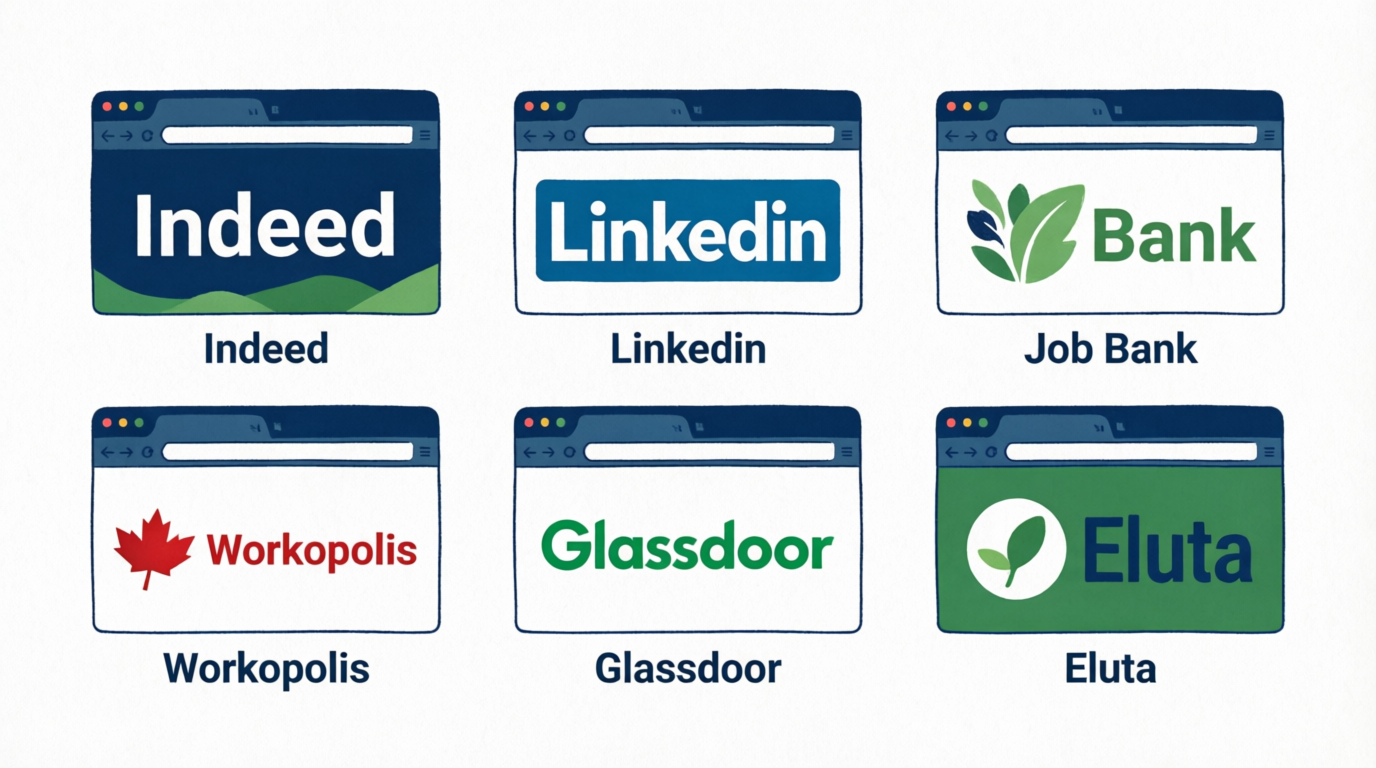
A reasonable rhythm that works for most people: check Indeed and LinkedIn daily with saved searches and alerts turned on. Run a broader search on Workopolis and Eluta once or twice a week. Use Glassdoor to research any company before applying. Keep Job Bank active if you are interested in public sector or federal government roles.
The other piece that matters more than most people expect is your resume. Every platform on this list sends your resume to an employer. Whether that application gets read depends heavily on whether your resume passes the ATS screening most Canadian employers use before a recruiter ever opens the document. Getting your resume right is not just a nice thing to do before applying. It is the first thing.
If you are not sure whether your resume is ready for the Canadian job market, CVMaple runs a free ATS audit that checks your resume against Canadian employer standards specifically. It flags missing keywords, formatting issues that trip up automated screening, and sections that Canadian recruiters expect to see. It takes about two minutes and tells you specifically what to fix before you start sending applications.
The job boards are the pipeline. Your resume is what determines how much of that pipeline converts into actual interviews.
A Note for Newcomers Specifically

If you are new to Canada, the job search process here has some real differences from what you may be used to. The "Canadian experience" barrier is real and it is frustrating. Employers who ask for Canadian experience are often really asking whether you understand local workplace culture, communication norms, and the specific terminology used in your industry here.
Top 10 Resume Mistakes Newcomers Make in Canada (and How to Fix Them)
The most practical ways to address this are: tailoring your resume to use Canadian industry language rather than direct translations of your titles and responsibilities from home, volunteering or joining professional associations to build local connections, and being explicit on your resume about your Canadian presence and your work authorisation status.
Platforms like Job Bank and organisations like ACCES Employment and YMCA Employment Services have specific newcomer-focused job programs and employer connections that bypass the general application pool entirely. These are worth investigating in parallel with the job boards above.
FAQ
Q: Which job site has the most listings in Canada? A: Indeed Canada consistently has the highest volume of job listings across most industries and regions. It aggregates postings from employer websites, staffing agencies, and direct submissions. For sheer number of available roles, it is the starting point for most Canadian job searches.
Q: Is Job Bank Canada only for government jobs? A: No. Job Bank lists jobs from private sector employers across every industry in addition to government positions. It is the official Government of Canada job board but it covers the full range of employment types including entry level, skilled trades, professional roles, and seasonal work. It also includes a dedicated newcomer section with resources specific to people new to the Canadian job market.
Q: Are there job boards specifically for newcomers to Canada? A: Job Bank has a specific newcomer section and is one of the best starting points. ACCES Employment and YMCA Employment Services also have job boards and employer connections specifically for newcomers and internationally trained professionals. LinkedIn is also worth using early since many recruiters actively search it and your profile can attract inbound interest without you applying directly.
Q: How many job boards should I be using at the same time? A: Most job seekers get the best results from using two or three main platforms consistently rather than trying to monitor ten. Indeed and LinkedIn cover the majority of available roles. Adding Job Bank for public sector opportunities and Glassdoor for company research rounds out a practical and manageable search strategy for most people.
Q: Does it matter which job board I apply through? A: The platform matters less than the quality of your application. Most employers who post on multiple boards process all applications the same way regardless of where they came from. What matters is that your resume is tailored to the specific role and formatted to pass ATS screening. A strong tailored resume submitted through any platform will outperform a generic one submitted through every platform.
Conclusion
Before you start working through any of these job boards, take ten minutes to check whether your resume is ready for Canadian employers. Most ATS systems used by Canadian companies screen out a significant percentage of applications before a human sees them, based purely on keyword matching and formatting. If your resume has issues you are not aware of, applying to more jobs will not fix the problem.
CVMaple runs a free Canadian ATS resume check at Resume Check Canada that tells you your score, flags the specific keywords you are missing, and identifies formatting issues that cause automated screening failures. The free plan covers two checks per month which is enough to verify your resume before your main applications. If you are applying actively to multiple roles per week, the Pro plan at $9.99 per month gives you unlimited checks and job posting keyword matching so you can tailor and verify your resume for every application before it goes out. It is the most practical thing you can do before your job search on any of these platforms gains momentum.
About the author
Catherin is an author at CVMaple, writing guides on how to write a Canadian resume, resume tips, Express Entry resumes and job search sites in Canada.
Spotted something out of date? Tell us at support@cvmaple.ca.