How to Get a Job in Canada with No Canadian Experience
Written by Anmol B. · Published · Updated
How to Get a Job in Canada with No Canadian Experience
You passed the language test. You got your visa. You landed in Canada full of optimism. Then you started applying for jobs and hit a wall that nobody warned you about: "We are looking for candidates with Canadian work experience."
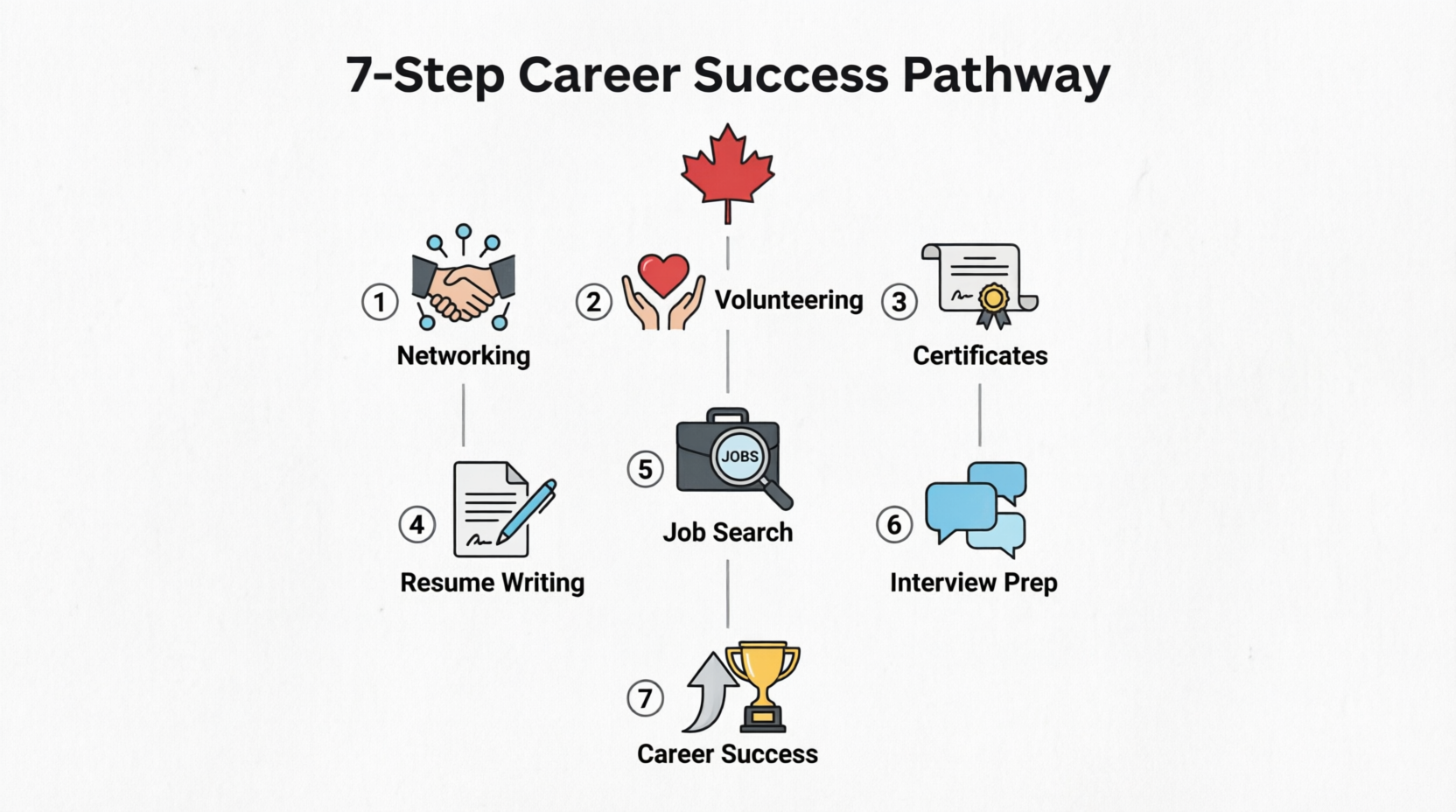
It is one of the most frustrating catch-22s in the Canadian job market. You cannot get Canadian experience without a Canadian job. But you cannot get a Canadian job without Canadian experience. For hundreds of thousands of newcomers every year, this circular logic is the single biggest obstacle between arrival and stability.
Canadian Resume Format: 2026 Guide for Newcomers in Canada
The good news is that it is not an impossible wall. It just requires a different approach than what most newcomers try first.
Why Canadian Employers Ask for "Canadian Experience"
Before getting into solutions, it helps to understand what employers actually mean when they say this - because it is rarely about doubting your skills.
What they are usually signalling is uncertainty. They are not sure how your foreign credentials translate. They are not sure whether your communication style fits their workplace culture. They are not sure if you understand the regulatory environment, the tools their industry uses locally, or the unwritten norms of Canadian professional life.
None of that is a judgment on your competence. It is a risk-management reflex. And once you understand it that way, it becomes something you can actually address.
What Does Not Work (and Why People Try It Anyway)
The most common mistake newcomers make is sending out a high volume of generic applications and waiting. The logic makes sense - more applications should mean more responses. But without Canadian experience on your resume, a generic application is almost always filtered out by Applicant Tracking Systems (ATS) before a human ever reads it.
The second mistake is downplaying or hiding international experience. Some newcomers shorten their resume dramatically, worried that foreign employer names will signal "not local." This usually backfires. A sparse resume raises more questions than a full one with international experience framed correctly.
The third mistake is only targeting large companies. Big employers like RBC, Scotiabank, or major tech firms receive thousands of applications and rely heavily on automated screening. Smaller and mid-sized Canadian companies often have more flexible hiring processes and more direct access to decision-makers.
7 Strategies That Actually Work
1. Reframe Your International Experience for Canadian Employers
Your experience is real. The issue is often translation - not of language, but of terminology and context.
Go through your resume and look at every job title, skill, and achievement. Then search Canadian job postings in your field and note the exact language they use. If you were a "Finance Executive" in your home country, but Canadian postings use "Senior Financial Analyst," update your title where accurate. If your industry uses different software names or certification terminology locally, reflect that.
This is not dishonesty - it is localisation. And it makes an enormous difference in how your background reads to a Canadian recruiter who may have no frame of reference for your previous employers.
2. Add Canadian Context Through Volunteer Work
Canada takes volunteering seriously. It is not just filler on a resume here - it is a genuine signal that you are engaged with the community and integrating into local professional life.
Look for volunteer opportunities that are directly relevant to your field. Many professional associations, non-profits, and settlement agencies need skilled volunteers in marketing, finance, IT, project management, and dozens of other areas. Even 3 to 4 months of relevant volunteer work gives you a Canadian organisation name on your resume and a local reference.
ACCES Employment, Skills for Change, and the YMCA Employment Services across Ontario all have programs that can connect you with these opportunities quickly.
3. Get a Canadian Credential or Certificate
A short certification course completed in Canada - even an online one - signals to employers that you are actively updating your skills to meet local standards.
This does not mean going back to school for two years. A project management certificate from a Canadian college, a cybersecurity course from a recognised Canadian provider, or a professional development workshop through your industry's Canadian association can all do the job. Put it on your resume with the Canadian institution's name clearly visible.
4. Target Companies That Actively Hire Newcomers
Not all Canadian employers treat international experience the same way. Some sectors and companies are explicitly looking for globally experienced talent.
Technology companies in Toronto, Vancouver, and Waterloo tend to be far more open to international backgrounds than traditional industries. Healthcare is actively recruiting internationally trained professionals due to genuine shortages. Construction, logistics, and skilled trades have significant demand and are often less credential-focused in their initial hiring.
Beyond sector, look for employers that have signed on to the Government of Canada's "50 - 30 Challenge" or similar diversity commitments. These organisations have made specific pledges around inclusive hiring and tend to be more receptive to newcomer applicants.
5. Use Settlement Agency Employer Connections
This is one of the most underused resources available to newcomers in Canada.
Settlement agencies like ACCES Employment, Achev, WoodGreen, and immigrant-serving organisations across every province have direct relationships with local employers. They run job fairs, mentorship programs, and sector-specific bridge programs that connect newcomers directly with hiring managers - bypassing the ATS entirely.
Many of these programs are free. Some are funded specifically for newcomers within their first few years in Canada. If you have not already registered with a settlement agency in your city, do it this week.
6. Build a Canadian Professional Network Before You Apply
In Canada, who you know still matters. A significant percentage of job openings are filled through referrals and networking before they are ever posted publicly.
LinkedIn is the primary professional networking tool in Canada. Make sure your profile is complete, uses a professional photo, and reflects Canadian industry terminology. Then start connecting - with people in your field, with alumni from your university who are now in Canada, with people you meet at industry events or settlement agency programs.
Do not connect and immediately ask for a job. Connect, engage with their content, have genuine conversations, and let relationships develop. When a role does come up, a referral from someone inside the company can move your application past the ATS entirely.
Informational interviews are another underused tool. Reach out to people working in roles similar to what you are targeting and ask for a 20-minute conversation to learn about their experience. Most people are willing. And those conversations often lead to referrals, tips about unadvertised openings, or at minimum a name that means your application gets a second look.
7. Tailor Every Single Resume to the Specific Job
This one is not optional. A tailored resume outperforms a generic one by a significant margin, especially when you are trying to overcome the "no Canadian experience" flag.
For every application, read the job posting carefully and identify the 5 to 8 most important skills and qualifications the employer is asking for. Then make sure those exact terms appear in your resume - in your skills section, your professional summary, and your bullet points where accurate. Not stuffed in awkwardly, but integrated naturally into descriptions of real work you have done.
This process takes 15 to 20 minutes per application. It is the difference between a 2% response rate and a 15% response rate.
CVMaple's one-click builder was actually designed with this exact situation in mind: newcomers who have strong experience but need to tailor a new version of their resume quickly for each application. The AI matches your background to the job description and reformats the output to Canadian ATS standards - so you are not starting from scratch 20 times. (https://cvmaple.ca)
How to Structure Your Canadian Resume When You Have No Local Experience
The structure of your resume matters enormously. Here is what a strong Canadian resume looks like, section by section.
Contact Information
At the top: your full name, a Canadian phone number, a professional email address, your city and province (you do not need a full street address), and a link to your LinkedIn profile if it is complete and up to date. That is it. No photo, no SIN, no date of birth.
Professional Summary
This is your most important section when you lack Canadian experience, because it is the first thing a recruiter reads after your name. Write 3 to 5 focused sentences that explain who you are professionally, what you bring to the table, and what you are looking for. Keep it specific to the role you are applying for.
A weak summary looks like: "Hard-working professional seeking opportunities in a dynamic environment where I can use my skills."
A strong summary looks like: "Certified project manager with 7 years of experience leading cross-functional teams in the pharmaceutical industry. Delivered 14 projects on time and under budget across three countries. Bringing a systems-based approach to operational efficiency and team leadership - now building a career in Ontario's life sciences sector."
Notice the difference. The strong version tells the recruiter exactly what you do, gives a concrete result, and signals that you understand the Canadian context. That is the standard you are aiming for.
Work Experience
List your international experience in reverse chronological order, starting with your most recent role. Include your job title, the company name, the city and country where you worked, and the dates of employment using the format "Month Year - Month Year" (for example, "March 2021 - November 2024").
Under each role, use 3 to 5 bullet points. Every bullet point should start with a strong action verb and include a measurable result wherever possible. Do not describe your duties - describe what you achieved.
Strong action verbs that resonate with Canadian recruiters include: led, developed, implemented, reduced, increased, managed, launched, trained, coordinated, improved, delivered, negotiated, and resolved.
If your job title does not translate cleanly into Canadian terminology, use the closest Canadian equivalent in brackets. For example: "Senior Engineer (equivalent to P.Eng-level role in Canada)." This helps recruiters quickly understand your level without needing to research foreign job hierarchies.
Skills Section
Include a mix of hard skills and soft skills that are directly relevant to the job posting. Look at the actual job description for the roles you are applying for and mirror the exact language they use. If the posting says "stakeholder communication," use that phrase - not "dealing with clients." ATS systems match keywords, not synonyms.
Soft skills like teamwork, communication, and adaptability are valued in Canada, but they carry far more weight when you show them in your experience bullets rather than just listing them in a skills section.
Education
List your degrees with the institution name, city and country, and the year you graduated. If you have had your credentials assessed through World Education Services (WES) or a provincial assessment body, note this clearly: "BEng Mechanical Engineering, [University Name], India (WES-assessed equivalent to Canadian bachelor's degree, 2024)." This removes uncertainty for Canadian recruiters who may not be familiar with your institution.
Canada AI Recruitment Market: How Artificial Intelligence Is Reshaping Hiring in 2026
A Practical Checklist Before You Apply
Before sending any application, run through this list:
No photo, no date of birth, no marital status, no SIN
Canadian phone number and city listed clearly
Professional summary is specific to this role
All experience bullets start with action verbs and include measurable results
Keywords from the job posting appear naturally in your resume
Any volunteer work or certifications are listed and formatted like work experience
WES credential assessment noted if applicable
Resume is one to two pages, single column, clean font
Saved as PDF
Cover letter is tailored and addresses the experience gap confidently
LinkedIn profile is complete and matches your resume
CVMaple's resume audit feature can cross-check your document against this list automatically - flagging the specific sections that are likely to be filtered by ATS before a human sees your application. It is the kind of tool that was genuinely designed with newcomers in mind: fast, practical, and focused on the Canadian market.
What to Do About Employment Gaps
If you have been in Canada for several months and have not yet found work, that gap will appear on your resume. Do not panic about it, but do address it.
In your professional summary, you can briefly note that you relocated to Canada and have been completing professional development and integration activities. If you have been volunteering, taking courses, or attending networking events - all of which you should be doing - those can be listed to fill the gap period with meaningful activity.
Honesty works better than avoidance here. Canadian employers understand that immigration involves a transition period. What they want to see is that you used that time productively.
The Realistic Timeline
Getting your first Canadian job typically takes longer than newcomers expect. In competitive markets like Toronto and Vancouver, three to six months is common even for well-qualified candidates. In some sectors and smaller cities, it can be faster.

The strategies above are not magic. They are a system. Volunteer work, certification, networking, tailored applications, and settlement agency connections all compound over time. Doing two or three of them will move the needle. Doing all of them simultaneously changes the equation entirely.
Canada has genuine labour shortages in most skilled sectors. The employers are there. The jobs are there. The path through the "no Canadian experience" barrier is not fast, but it is very real.
FAQ
Q: How long does it typically take to find a job in Canada as a newcomer? A: It varies significantly by field, city, and how actively you are networking and tailoring applications. In major cities like Toronto and Vancouver, three to six months is a realistic average for professional roles. Trades, healthcare, and logistics roles can move faster due to shortage demand. Using settlement agency programs and building a local network actively can shorten this timeline.
Q: Do I need a Canadian degree to get a job in Canada? A: Not for most roles. Canadian employers in non-regulated fields generally accept international degrees. For regulated professions like engineering, nursing, medicine, or law, you will need to have your credentials recognised by the relevant provincial body. For everyone else, the combination of your degree, your experience, and local certifications or volunteer work is usually sufficient.
Q: Should I put my international experience on my Canadian resume? A: Absolutely yes. Do not remove or minimise international experience. Instead, reframe it using Canadian industry terminology and lead with achievements and numbers rather than job duties. A resume that hides experience looks sparse and raises questions. A resume that presents international experience clearly and confidently reads as the background of a globally experienced professional.
Q: What is an informational interview and should I request one? A: An informational interview is a short, casual conversation - usually 15 to 30 minutes - where you ask someone about their career, their company, and their industry rather than directly asking for a job. It is one of the most effective networking tools available in Canada and often leads to referrals for actual openings. Reach out through LinkedIn with a specific, polite request and most people will say yes.
Q: Are settlement agency programs worth it? A: Yes - especially in your first year. Programs through organisations like ACCES Employment, Achev, and WoodGreen are free, tailored to newcomers, and often have direct employer relationships. Many run sector-specific bridge programs that combine Canadian workplace orientation with introductions to hiring managers. They are significantly more targeted than applying cold through job boards.
Conclusion
The "no Canadian experience" barrier is real, but it is not permanent. The newcomers who break through it fastest are the ones who approach the job search as a system - networking, volunteering, tailoring every application, and using every resource available to them.
Canada AI Recruitment Market: How Artificial Intelligence Is Reshaping Hiring in 2026
CVMaple can handle the resume side of that system. Whether you are tailoring a new version for a specific posting, running an ATS audit to see how your current resume scores, or building a Canadian-standard resume from your existing experience, it is built for exactly this situation. Start free at https://cvmaple.ca/ - no credit card required.
About the author
Anmol B. is an author at CVMaple, writing about how newcomers get hired in Canada without Canadian work experience.
Spotted something out of date? Tell us at support@cvmaple.ca.