Canadian Applicant Tracking System (ATS): How It Works and How to Get Past It
Written by Nitesh · Published · Updated
Canadian Applicant Tracking System (ATS): How It Works and How to Get Past It
You apply for a job on a Monday morning. Your experience matches almost everything in the posting. You hit submit, feel good about it, and then nothing happens. No call. No email. Not even a rejection notice most of the time. Just silence.
If this has happened to you more than once in Canada, there is a good chance an Applicant Tracking System, not a human being, was the first thing to evaluate your resume. And it decided you were not worth passing along.
This is not a conspiracy theory or an excuse job seekers tell themselves. It is how hiring actually works at most mid-sized and large Canadian employers in 2026. Understanding the Canadian Applicant Tracking System, what it actually does, and how to work with it rather than against it, is one of the most practical things you can learn before your next application.
Related article: Best ATS-Friendly Resume Format in 2026: Canadian Job Seekers Guide
What Is an Applicant Tracking System
An Applicant Tracking System, almost always shortened to ATS, is software that companies use to collect, sort, and filter job applications before a human recruiter looks at any of them. When you apply through a company careers page, a portal like Workday or Greenhouse, or even through Indeed and LinkedIn in many cases, your resume is usually routed into one of these systems first.
The ATS does three main things. It parses your resume, meaning it reads the document and pulls out structured information like your name, contact details, work history, education, and skills. It scores your application against the requirements the employer entered for that specific role. And it organizes everything so a recruiter can filter, search, and rank candidates instead of manually opening every single resume that comes in.
None of this is unique to Canada. ATS software is used globally. What is specific to the Canadian context is how employers configure these systems, what they screen for, and which conventions Canadian resumes need to follow to be read correctly in the first place.
Which Canadian Employers Actually Use ATS Software
Almost every employer you would recognize by name uses some form of ATS. Banks like RBC, TD, CIBC, and Scotiabank all use applicant tracking software for their hiring pipelines. So do major retailers like Loblaws and Canadian Tire, telecom companies like Bell and Rogers, and tech companies like Shopify. The Government of Canada uses its own system through the GC Jobs portal, which works on a somewhat different logic than private sector tools but shares the same core idea of screening before reviewing.
Even smaller and mid-sized Canadian companies increasingly rely on ATS platforms like Greenhouse, Lever, Workday, BambooHR, and iCIMS. If you are applying through an online portal rather than emailing a resume directly to a hiring manager, it is safe to assume an ATS is involved somewhere in the process.
This matters because the resume that gets you a callback in Canada is not necessarily the resume that looks the most polished to a human eye. It is the resume that survives the software first, then impresses the person who reads it second.
How to Write a Canadian Resume in 2026 | Complete Guide
How ATS Parsing Actually Works
Here is the part most job seekers misunderstand. The ATS is not reading your resume the way a person reads it. It is not appreciating your layout or admiring your font choice. It is scanning the document for data points it has been trained to expect: a name, a phone number, an email, a list of job titles with dates, an education section, and a block of skills or keywords.
Complicated formatting is where resumes most often go wrong. Two-column layouts, tables, text boxes, and headers or footers containing your contact information can all confuse a parser. If your resume uses a stylish two-column design, the ATS might try to read straight across both columns at once, scrambling your work experience into a jumbled mess that does not match anything the system expects to see.
Some newer platforms like Greenhouse and Lever have improved their parsing significantly over the past few years, but even the best systems still make mistakes with heavily designed resumes. The safest approach is a clean, single-column layout with standard section headings: Professional Summary, Work Experience, Education, Skills. Boring, in a sense. But boring is exactly what gets parsed correctly.
A resume saved as a typed PDF or a Word document both tend to work fine. A resume that was scanned from a printed page, however, is essentially just an image to most ATS software. It cannot extract text from it at all, which means the system has no data to score in the first place.
Why Keywords Decide So Much
Once your resume is successfully parsed, the ATS scores it. And in almost every case, that score comes down to keyword matching.
When a recruiter sets up a job posting inside their ATS, they typically list required skills, preferred qualifications, certifications, and sometimes specific software or tools. The system then checks how many of those exact terms appear in each submitted resume. Higher matches generally produce a higher score, and resumes above a certain threshold get surfaced for a human to actually open.
This is exactly why sending the same generic resume to fifty different postings rarely works as well as people expect. A resume tailored to each specific posting, using the same terminology the employer used, will consistently outscore a more impressive but generic resume. If a posting asks for "project management" and your resume says "program oversight," the system may never connect the two, even though you mean the same thing.
How to Write a Canadian Resume in 2026 | Complete Guide
This does not mean stuffing your resume with every keyword you can find. Recruiters and hiring managers read the document after it clears the ATS, and an obviously keyword-stuffed resume looks unnatural and can actually hurt your credibility once a human is involved. The goal is accurate representation of your real experience using the specific language the employer is using, not padding the document with terms you cannot speak to confidently in an interview.
The Canadian-Specific Factors Most Job Seekers Miss
A few things about ATS screening in Canada do not always come up in general resume advice written for a global audience.
The first is location and work eligibility. Some Canadian employers configure their ATS to filter for candidates who are already located in Canada or who clearly indicate work authorization. If your resume does not show a Canadian city and province, or some indication that your work permit or permanent residency status allows you to work here, you may be filtered out of roles you are otherwise fully qualified for. A simple line in your contact section showing your current city and province goes a long way.
The second is bilingual screening. For roles in Quebec, federal government positions, and many national companies, ATS systems are frequently set up to search for both English and French language indicators. If you are bilingual, this needs to be stated explicitly in your skills section and reflected in your professional summary. Do not assume the system will infer it from a French-sounding name or a degree from a Quebec institution.
The third is the Government of Canada's own application process. Federal job applications run through the GC Jobs portal and work differently from private sector ATS platforms. In many cases a standard resume alone is not enough. Candidates need to write structured responses demonstrating how they meet each listed qualification, often using the STAR method, in addition to submitting a resume. The formatting conventions for these applications, including plain unformatted text in many cases, are different enough from private sector norms that treating a federal application the same way as a private sector one is a common and costly mistake.
What ATS Screening Does Not Tell You
It is worth being honest about the limits here. Passing the ATS only means your resume cleared the first filter. It does not mean the recruiter will be impressed. It does not mean your experience is a genuinely strong fit for the role. And it definitely does not guarantee an interview.
Some job seekers, once they understand keyword matching, swing too far in the other direction and end up with a resume that scores well algorithmically but reads poorly to an actual person. That is its own kind of failure. The strongest resumes are optimized for both audiences at once: clean formatting and relevant keywords to satisfy the software, paired with specific, quantified achievements and strong action verbs to satisfy the recruiter who eventually opens the file.
Common ATS Mistakes Canadian Job Seekers Make
A handful of patterns show up again and again, and most of them are easy to fix once you know to look for them.
Using a heavily designed or graphic-style template is one of the most common. These templates look great as a finished PDF but are frequently unreadable to parsing software. The more visually elaborate the resume, the higher the risk that the ATS extracts your information incorrectly or not at all.
Putting your contact information inside a header or footer is another frequent issue, since many ATS platforms do not reliably scan headers and footers. Keep your name, phone number, and email in the main body of the document, ideally right at the top.
An outdated or unprofessional email address quietly undermines you at both the ATS stage and the human review stage. A clean email address with your name is the standard expectation in Canada.
Building a functional resume to hide an employment gap, where experience is organized by skill category instead of a chronological timeline, often backfires. These formats are harder for ATS systems to parse correctly, and experienced Canadian recruiters tend to recognize the pattern immediately, which can raise more questions than it answers. An honest, brief explanation of any gap in your professional summary or cover letter is usually the stronger choice.
Top 10 Resume Mistakes Newcomers Make in Canada (and How to Fix Them)
And probably the most common mistake of all: sending one unmodified resume to every job posting. The keyword mismatch alone is often enough to keep a perfectly good candidate out of the interview pile, regardless of how strong their actual experience is.
How to Actually Check Your Resume Against ATS
The good news is that checking your resume does not require guesswork. Start by reading the job posting closely and highlighting every specific skill, certification, tool, and qualification mentioned, paying particular attention to anything listed as "required" rather than "preferred," since those are the terms most likely to be weighted heavily by the system.
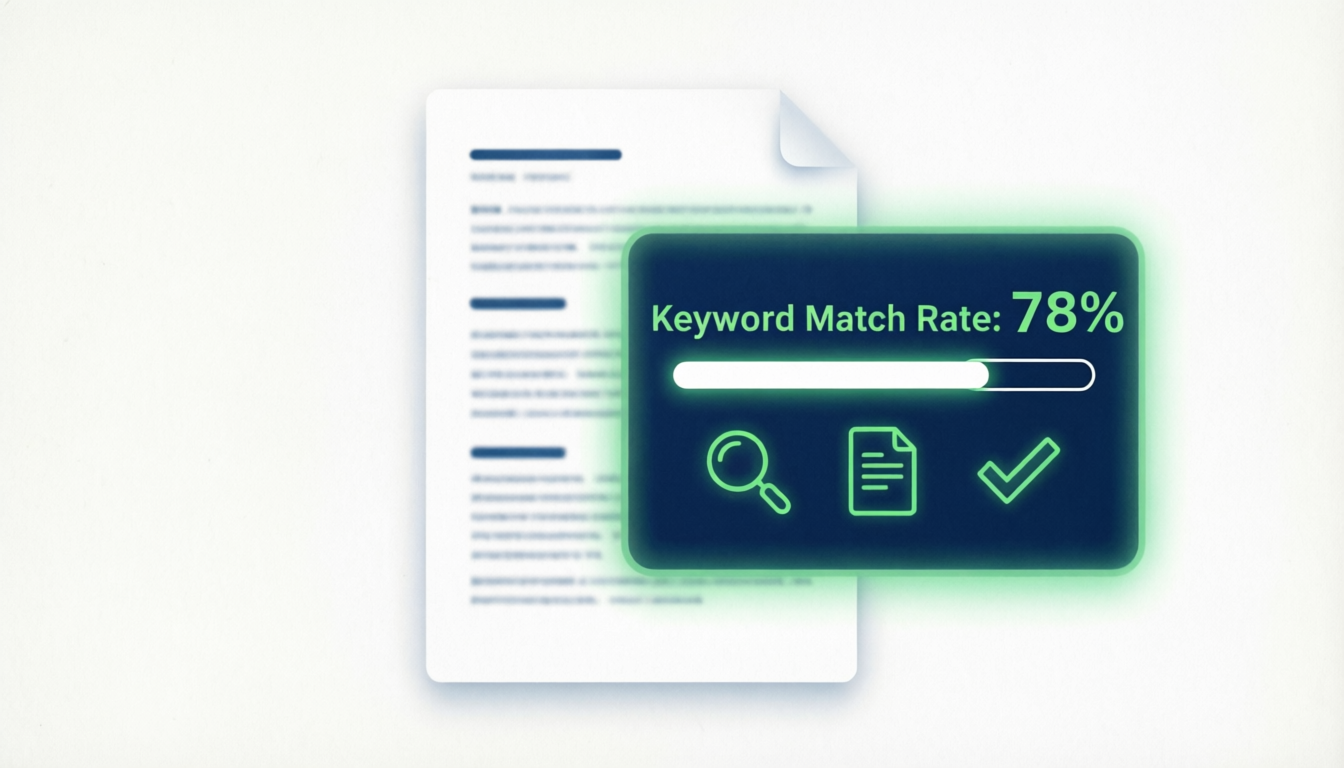
Then go through your resume and confirm each of those highlighted terms appears somewhere relevant, ideally in your skills section, your summary, or within a specific bullet point describing real experience. If a term genuinely applies to your background but is missing, add it. If it does not apply, leave it out rather than forcing it in.
It also helps to check your formatting directly. Paste your resume into a plain text editor and see whether it still reads logically. If a two-column layout collapses into a jumbled mess of out-of-order text, that is roughly what many ATS platforms will see too.
If you would rather not do this manually for every application, this is exactly the kind of repetitive checking that a tool like CVMaple was built to handle. CVMaple's resume check runs your resume against a Canadian-specific ATS scoring model, flags which keywords from a job posting are missing, and points out formatting issues before you submit anything. It takes about two minutes and removes most of the guesswork from the process, especially useful if you are applying to several roles in the same week.
What Happens After the ATS Clears Your Resume
If your resume scores well enough to reach a recruiter, the game changes. Canadian recruiters typically spend somewhere between six and thirty seconds scanning a resume for the first time before deciding whether to read further. They are looking at your most recent job title, your overall career trajectory, and whether the top section of your resume tells a clear, coherent story about who you are professionally.
This is why the top third of the page matters so much. A strong professional summary, three or four sentences naming your role, your years of experience, and your most relevant strength, gives a recruiter a reason to keep reading immediately. From there, the rest of the resume should follow a clean reverse chronological structure with specific, quantified bullet points. "Managed a team" tells a recruiter almost nothing. "Led a team of nine and reduced onboarding time by 35 percent" tells them exactly what kind of contributor you are.
The resumes that perform best in the Canadian job market do both things at once. They are built to be read correctly by software, and they are written to be genuinely persuasive to the person who eventually opens the file. Getting both right is not complicated, but it does take intention, and most resumes are simply not built with either in mind.
FAQ
Q: What is a Canadian Applicant Tracking System? A: A Canadian Applicant Tracking System is software used by employers in Canada to collect, parse, and score job applications before a recruiter reviews them. It extracts information from your resume such as work history, skills, and education, then ranks candidates based on how closely their resume matches the requirements entered for that role.
Q: Which Canadian companies use ATS software? A: Most mid-to-large Canadian employers use some form of ATS, including major banks like RBC and TD, retailers like Loblaws, telecom companies like Bell and Rogers, and tech companies like Shopify. The Government of Canada also uses its own application system for federal job postings through GC Jobs.
Q: How do I know if my resume passed the ATS? A: There is usually no direct confirmation. The clearest sign is prolonged silence after applying, with no acknowledgement or rejection at all. Checking your resume against an ATS scoring tool before submitting it is the most reliable way to catch formatting or keyword issues in advance.
Q: Does formatting really affect whether an ATS can read my resume? A: Yes, significantly. Tables, text boxes, multi-column layouts, and contact information placed in headers or footers can all cause an ATS to misread or skip important information. A clean, single-column resume with standard section headings is far more likely to be parsed correctly.
Q: Should I use the exact keywords from the job posting on my resume? A: Yes, where they genuinely reflect your experience. ATS scoring is based heavily on matching the specific terminology used in the posting, so using the employer's exact language, rather than a paraphrased version, improves your chances of clearing the initial screening. Avoid adding keywords that do not reflect real experience, since this becomes obvious once a human reviews the resume.
Conclusion
Checking whether your resume is actually ATS-ready does not need to be a guessing game every time you apply. CVMaple's resume check scores your resume against Canadian ATS standards, flags the specific keywords missing from a job posting you paste in, and highlights formatting issues before they cost you an interview. The free plan includes a couple of checks each month, which covers most casual job searches. If you are applying actively and sending out several tailored applications a week, the Pro plan removes that limit entirely and adds job-specific keyword matching, so you can verify and adjust your resume before every single application goes out.
About the author
Nitesh is an author at CVMaple, writing about how applicant tracking systems in Canada read resumes and the resume mistakes newcomers make.
Spotted something out of date? Tell us at support@cvmaple.ca.